


What Is Behind Professional Astrological Calculations
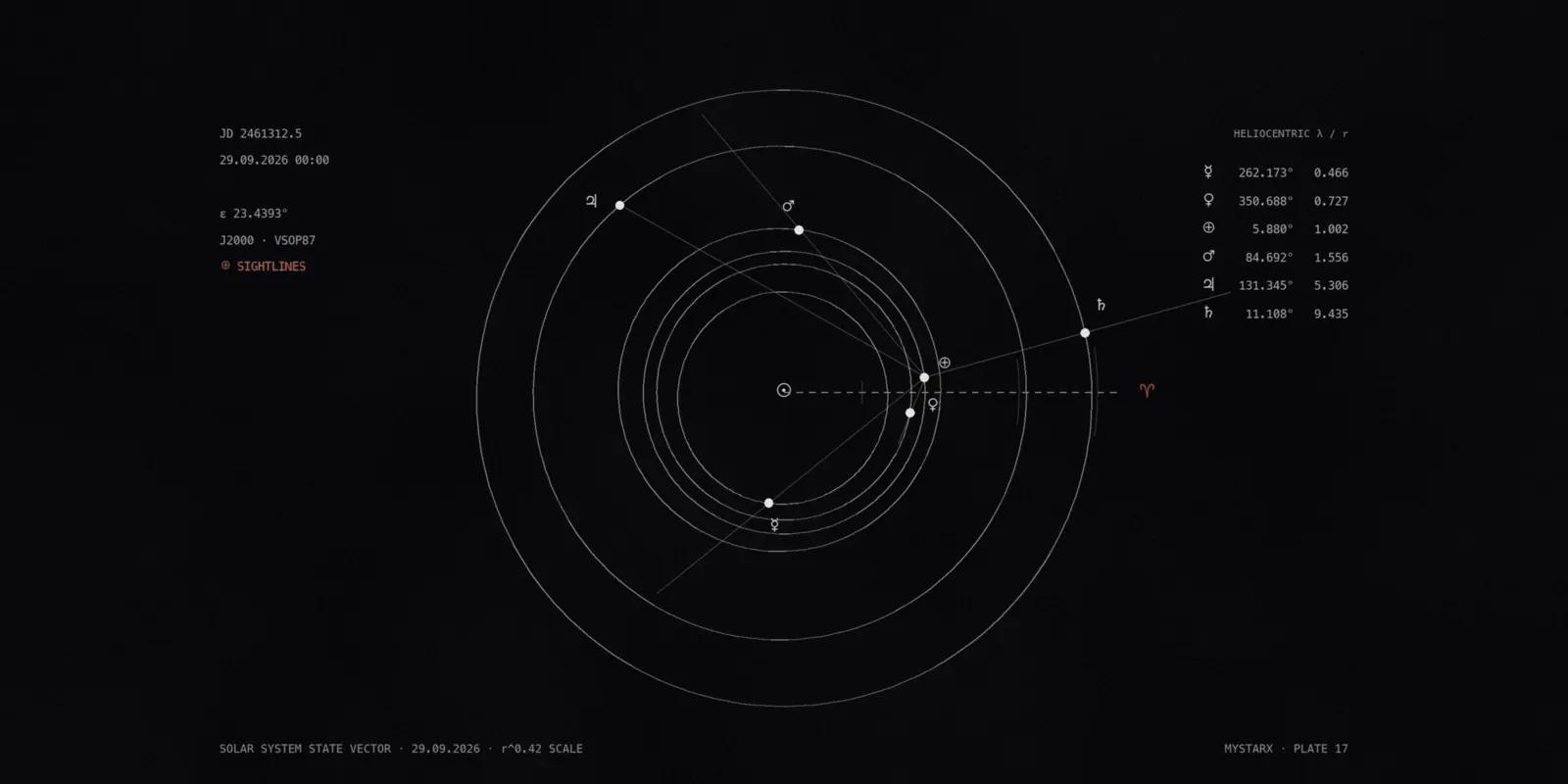
For most people, astrology is a magazine column written somewhere between a pie recipe and a crossword. But behind serious astrology is something completely different: high-precision astronomical computations using the same data as space agencies.
When a professional astrologer calculates your natal chart, they do not "make up" planet positions. They get them from ephemeris - tables of precise celestial body coordinates. And ephemeris quality determines how accurate your chart will be.
Consider the difference: one calculator says "Venus at 15 degrees Taurus," another (more precise) says "Venus at 14 degrees 58 minutes Taurus." Seems minor. But those 2 minutes can mean Venus forms an aspect with another planet - or does not. That completely changes the interpretation.
What Are Ephemeris and Why They Matter
Ephemeris (from Greek "ephemeros" - "daily") are tables showing exact positions of the Sun, Moon, planets, and other celestial bodies at every moment in time.
In astrology, ephemeris are needed for:
- Natal chart calculation - to find where each planet was at the moment of your birth
- Transit calculation - to know where the planets are now and how they interact with your chart
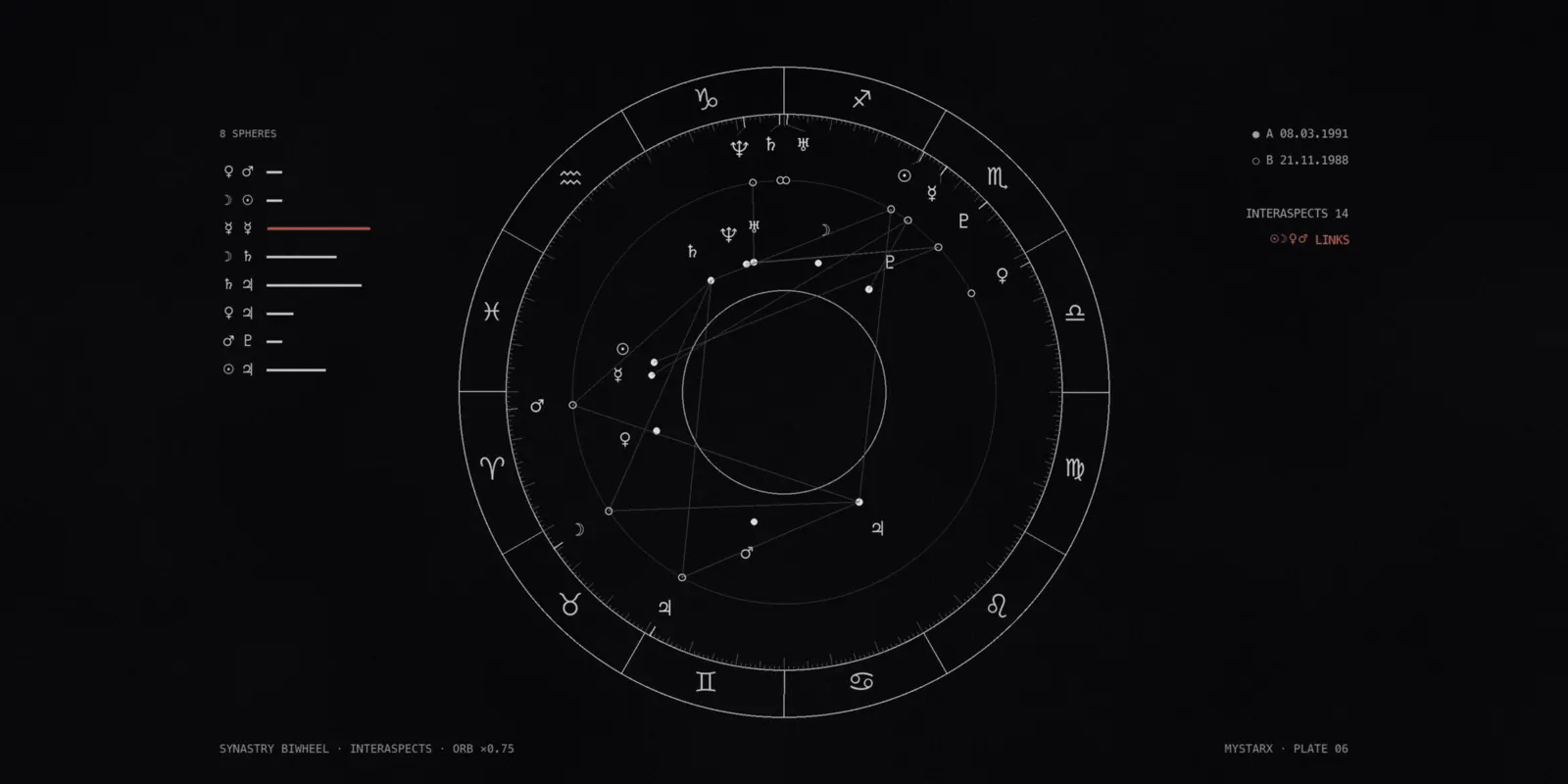
- Synastry - the exact planet positions of both partners determine the aspects between the charts
- Electional astrology - choosing the best dates for important events
The problem is ephemeris come in different quality levels. The difference between "good" and "bad" is like GPS navigation versus a hand-drawn map.
Swiss Ephemeris: The Gold Standard
Swiss Ephemeris is an astronomical computation library developed by the Swiss company Astrodienst (founded in 1980 by astrologer Alois Treindl). It is considered the gold standard in astrological software.
Why Swiss Ephemeris Is So Valued
- NASA JPL DE441 data - Swiss Ephemeris is built on the DE440/DE441 family of ephemerides from NASA's Jet Propulsion Laboratory (2021 release). JPL uses DE440 for current spacecraft navigation (yes, including missions to Mars), and DE441 is the long-span version of the same solution
- Arc-second accuracy - for context, 1 arc-second is the width of a coin seen from 4 kilometers away. Swiss Ephemeris itself differs from the original JPL data by about 0.001 arc-seconds, and this precision is critical for calculating aspects correctly
- Range of about 30,000 years - from 13201 BC to 17191 AD. You can calculate a chart for any moment in this range
- Open source - distributed under the AGPL or a commercial license and used by hundreds of astrological programs worldwide
What the Calculations Include
Swiss Ephemeris calculates the positions of the Sun, Moon, Mercury, Venus, Mars, Jupiter, Saturn, Uranus, Neptune, and Pluto, as well as the Lunar Nodes, Chiron, Lilith, and other objects.
NASA JPL DE441: Where the Data Comes From
JPL stands for Jet Propulsion Laboratory - NASA's facility in Pasadena, California. This is where the ephemerides used for both space flights and astrological calculations are created.
DE440/DE441 - The 2021 Release
DE441 (Development Ephemeris 441) is the long-span version of the JPL ephemeris, published in 2021 together with DE440. The DE440/DE441 family accounts for:
- Gravitational influence of all major Solar System bodies
- Relativistic corrections (Einstein's theory of relativity)
- Data from radar observations and space missions
- Influence of more than 340 asteroids
Fun fact: when NASA sends a spacecraft to another planet, its trajectory is calculated using JPL ephemerides (currently DE440). If they were inaccurate, the spacecraft would miss by thousands of kilometers.
Why Calculation Accuracy Matters for YOU
Why should an ordinary person care about arc-seconds? Here are concrete examples of why it matters:
Example 1: Ascendant
The Ascendant changes signs on average every 2 hours (in practice anywhere from about 1 to over 3 hours, depending on the sign and latitude). On sign boundaries, even a 5-minute error can give the wrong Ascendant - completely changing all 12 house structures.
Example 2: Aspects
Mars square Saturn with 0.5-degree orb is very powerful. But if the calculator errs by 1 degree, it might "see" a 1.5-degree orb (significantly weaker) or miss it entirely.
Example 3: Transits
Exact transit start/end dates determine when influence peaks. A several-day error can shift the entire forecast.
On MystarX, all calculations use Swiss Ephemeris with NASA JPL DE441 data. Your natal chart is calculated with the same accuracy used by professional astrologers with 30 years of experience.
The same precision for both of your birth charts
In synastry, a few degrees off shifts the aspects between two charts and the conclusions with them. We calculate both charts with Swiss Ephemeris - just enter both birth details.
Calculate our compatibilitySwiss Ephemeris vs Other Calculators
Not all astrological calculators are the same. Here are the typical differences:
Professional (Swiss Ephemeris)
- Accuracy: arc-seconds
- Source: NASA JPL DE441
- All planets + Chiron, Lilith, nodes
- Multiple house systems
- Correct timezone handling
Simple Online Calculators
- Accuracy: may err by 1-3 degrees
- Source: simplified formulas
- Often only main planets
- One house system (if any)
- Sometimes timezone errors
The difference is like professional GPS versus a compass. Both show direction, but one leads to the door, the other "somewhere that way."
Frequently Asked Questions
The same precision for both of your birth charts
In synastry, a few degrees off shifts the aspects between two charts and the conclusions with them. We calculate both charts with Swiss Ephemeris - just enter both birth details.
Calculate our compatibilityRelated Articles

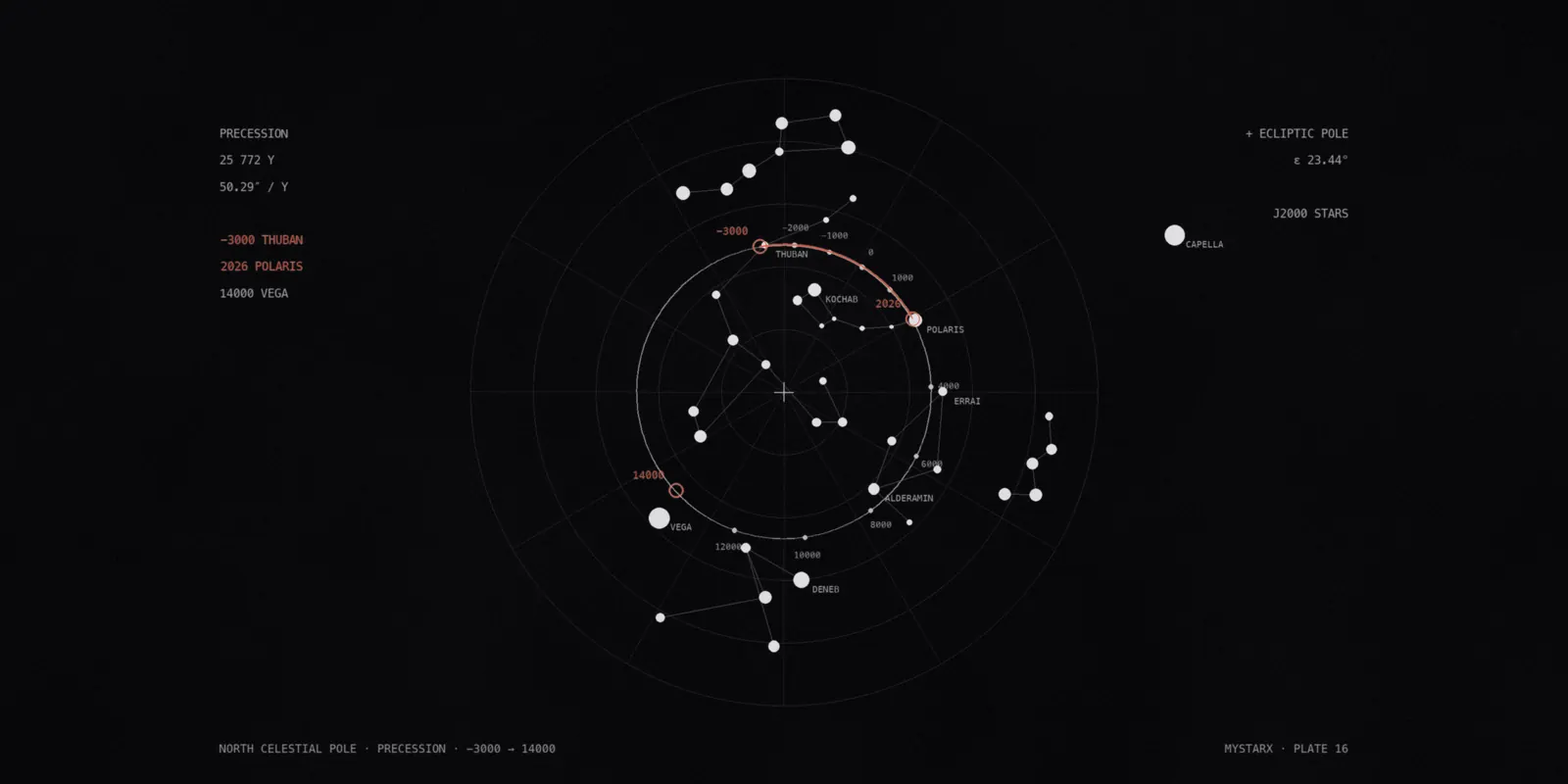
Is Astrology a Science? What 5,000 Years of Data Say
Objective analysis: is astrology a science? History from Babylon to NASA, what research says, and why this question is more complex than it seems.
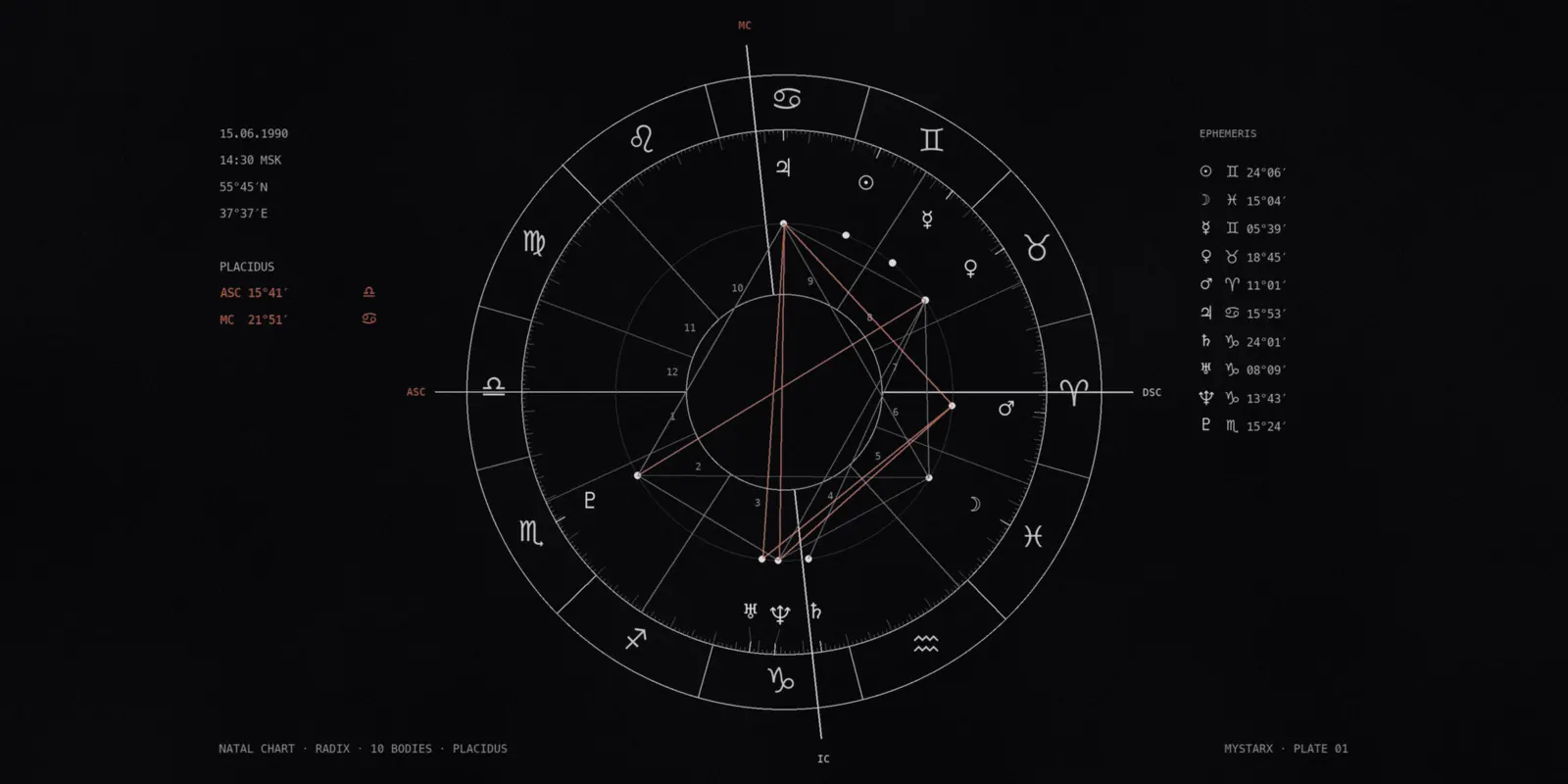
Natal Chart: Complete Beginner's Guide - How to Read Your Birth Chart
What a natal chart is and how to read it: planets, zodiac signs, houses, and aspects. A step-by-step guide for beginners with examples.
Synastry: 8 Types of Compatibility You Didn't Know About
Learn about 8 types of astrological compatibility: romantic, friendship, business, family, intellectual, sexual, karmic, and overall. Complete synastry guide.